
As an Amazon Associate, I earn from qualifying purchases. That means I earn commissions from my sponsored links or I make money when readers (you) purchase items through my links. Your purchase allows me to continue working as a stay-at-home dad who moonlights as a farmer and a musician. Needless to say, this post contains affiliate links.
The hegelung…
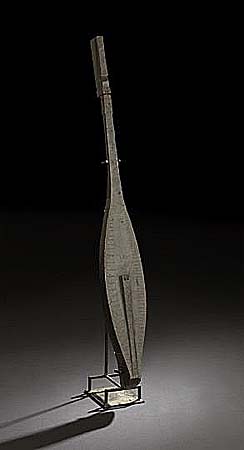
Two strings, a droning sound, a haunting melody.
And a very basic and at the same time, complex philosophy of the universe built into the instrument’s design.
There’s a guitarist in Lake Sebu, South Cotabato named Ma Fil Angkoy.
May he rest in peace…
Half Ubu, half T’boli.
He plays a two-stringed instrument called the hegelung — hegalung, hegelon, different spellings, same instrument — and people who’ve heard him say his fingers move so fast on two strings that the instrument sounds like it has six.
The equivalent of Jimi Hendrix but on a traditional instrument.
I wish I’d known about him earlier and got to see him perform live.
At least that would have given me a clearer idea of what the hegelung as an instrument in the hands of a master could do.
Part of what makes music exciting to me is seeing different instruments in the hands of people who’ve devoted a lot of time to mastering that specific tool.
And for me, the hegelung is one of those instruments that deserves more attention than it gets outside of its own community…
What is a Hegelung and Where Does it Come From?
The hegelung (also spelled hegalung or hegelon) is a traditional two-stringed boat-lute played primarily by the T’boli people of South Cotabato in southern Mindanao.
It belongs to a wider family of Philippine boat-lutes found across indigenous groups in Mindanao and Palawan — related to the kutiyapi of the Maguindanao and Maranao, the kudlung of the Manobo and Mansaka, the faglong of the Bilaan.
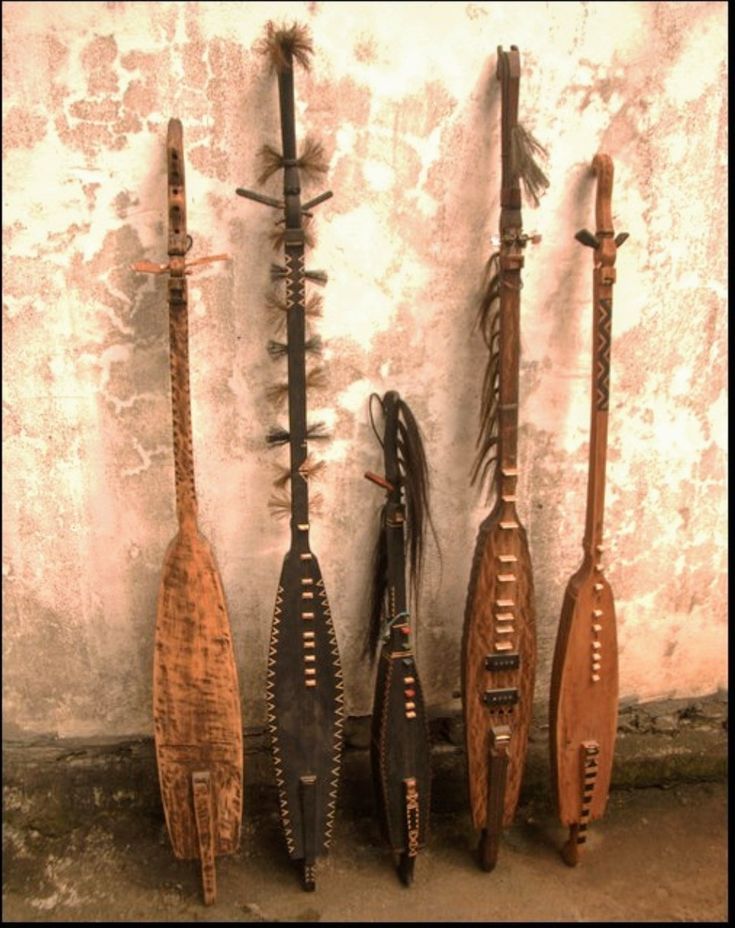
Same general family, different communities, different names, different regional expressions of the same deep impulse to make music from a carved piece of wood and two strings.
The T’boli people live primarily in the highland areas around Lake Sebu in South Cotabato — they predate Spanish colonial rule and their way of life, including their music, continued long after it ended.
They distinguish themselves from other indigenous peoples in Mindanao through their traditional clothing, T’nalak weaving from abacá fibers, bead works, brass ornaments, and their musical instruments. The hegelung is one of the most distinctive of those instruments.
How It’s Built
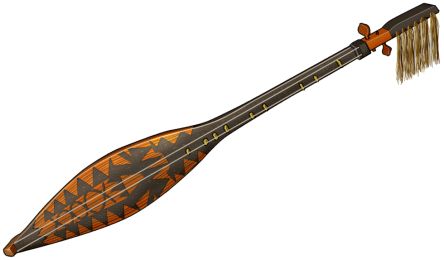
Body – Single piece of hardwood, carved and hollowed. Long, narrow, boat or canoe shape.
Strings – Two. Historically vine fiber or brass wire. Modern versions: steel or guitar strings.
Frets – Nine movable frets, attached using beeswax (sebu). Spaced to local tonal scales.
Headstock – Often carved into stylized animal shapes — hornbill, crocodile. With wooden tuning pegs.
Pick – Small wooden or rattan pick called a silit, held or attached to the plucking hand.
Classification – Chordophone · Two-stringed boat lute
The carvings on the headstock are worth noting.
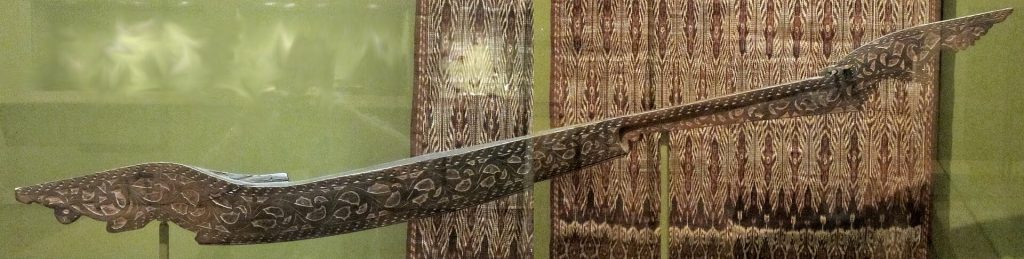
These aren’t decorative afterthoughts — they’re intentional expressions of the T’boli relationship with the natural world.
A hornbill, a crocodile, or other stylized animal forms.
The instrument is not just a sound-producing object. It’s also a cultural artifact that carries meaning in its physical form.
The movable frets glued with beeswax is a detail I find particularly interesting as a guitarist. Beeswax means the frets can be repositioned to accommodate different tonal scales — the hegelung is not locked into one fixed intonation system the way a Western guitar is.
That’s a fundamentally different philosophy of pitch and tuning built into the instrument’s construction.
The Two Strings and What They Mean
One Drone. One Melody. The Whole Universe.
Drone String
Keeps a continuous, rhythmic background tone. One note, repeating. It symbolizes permanence. The constant underneath everything.
Melody String
Pressed against the frets to play complex melodic lines and ornamentation very much like how you would play a traditional guitar. This is what provides musical movement. The note and tonal changes. This is everything, or the melody, on top that happens against the steady droning background.
The Philosophy Built Into the Instrument
This is the part that genuinely stopped me when I learned it.
The hegelung’s two strings represent what Philippine indigenous traditions understand as the cosmic unity of opposites — man and woman, forceful and tender, change and permanence, positive and negative.
The drone string is continuity.
The melody string is change.
Together they make music the same way the universe is held together by opposing forces in balance.
For a guitarist like me, used to thinking of a guitar as a six-string sound-producing machine, this reframing is humbling.
The hegelung turns music into a philosophical statement about how existence works.
And it does it with just two strings.
How It’s Played
The hegelung can be played while seated, standing, swaying, or dancing. The player holds or attaches the silit pick to their plucking hand and incorporates body movements and dance steps that mirror the mood or story of the song being played.
You cn also play it without the pick and opt for just fingers so that you can also incorporate percussive playing with the thumb against the hollow body. It’s cool.
It can be played solo, as accompaniment to chant-singing, or in ensemble with other T’boli instruments like the kubing (jaw harp) or agung (gongs).
T’boli women performing with the hegelung alongside the tnonggong drum, agung gong, and kulintang is the traditional full ensemble experience.
Like I said… it’s cool!
As a young kid growing up in Siocon, I was able to winess a master hegelung player entertain a large auditorium and gain a standing ovation. I was seated fron row thanks to my grandfather’s local political influence and I got a chance to go up to the musician and inspect his instrument, hands off of course.
I think he offered to let me touch the string but I was too afraid I would destroy it.
I was eight or nine.
What It Sounds Like
My first hand experience of seeing a hegelung played in front of me is that the player used the instrument as the focal point while using his entire surrounding as the musical backdrop.
He stomped his feet to provide the beat.
Used his thumb as an additional percussive instrument and he would occasionally sing and shout.
If I remember correctly, the hegelung was played with an upstroke motion using the four fingers from the index to the pinky, whichever is available at the time of playing.
The thumb could be used for downstroke playing but was mostly used for percussive effect.
The droning string was always struck but remained untouched by the frettiing hand. He also plucked the melody string with his middle finger and pinky.
His fretting hand was very much like that of a regular guitarist traveling the entire length of the fretboard to sound out the notes.
For dramatic effect, he would lift the hegalong up and everyone would be transfixed t the pompom like attachments at the headstock before he violently brought it down almost hitting the ground with it as part of his dance move.
To me, the hegelung might have been the main instrument but in fact, that man was the entire musical experience.
And I’ve never forgotten the hegelung because of that one performance.
The Folklore
T’boli Belief In T’boli tradition, music and nature are deeply intertwined. An aspiring hegelung player could gain the skill to play by rubbing their fingers with an insect called meglung alongside leaves from the meglung vine — the belief being that the phonetic harmony of the shared name passed the gift of playing from the natural world into the musician’s hands.
It is the kind of origin story that makes you understand how differently this culture hears the connection between the living world and music.
And yes… I’ve rubbed my fingers across the pages of my past Guitar World collection in the hopes that the skills of Steve Vai, Eddie Van Halen, Nuno Bettencourt, Vito Bratta, and Zakk Wylde would rub off on me.
No such luck.
Relevance
The hegelung faces significant threats to its survival amid broader socio-economic and environmental shifts affecting indigenous communities in Lake Sebu.
In the 1990s there were cultural revivals — T’boli musicians integrating the hegelung into festivals and community events as an assertion of ethnic identity, performances at recognized institutions.
Some versions have even hybridized with Western guitar elements, incorporating metal frets and amplification for modern ensembles.
I believe Joey Ayala and Elegee Custom Guitars is trying to come up with a legit modern version of the hegelung. I’m excited to see what that looks like.
But the traditional form, carved from hardwood with beeswax frets and two strings tuned to ancient local scales, is not something that sustains itself automatically.
It sustained itself because people like Ma Fil Angkoy kept playing it.
Because communities kept teaching it.
Because festivals like Kadayawan gives it a stage.
As a guitarist, the hegelung is a beautiful instrument (for its looks) that has a humbling effect on me because of the potential world of sounds it can evoke. And with just two strings!
It is the physical proof that man and instrument need to be in tune with one another to produce something magical that the sound you evoke shouldn’t just be limited to the instrument itself but it should incorporate your body and your surroundings.
A hegelung has a sound that can fill a room when the right hands are on it.
There is something this instrument understands about music that the modern guitar world has maybe overcomplicated.
Worth knowing about.
Worth listening to if you ever get the chance.
If you’re ever in South Cotabato, Lake Sebu is worth the trip on its own. The T’boli cultural village, the waterfalls, the weavers. And if you’re lucky, someone with a hegelung and the skill to play it the way Ma Fil Angkoy plays it.
That’s an experience that stays with you for the rest of your life.
I know my eight year old self would agree.