As an Amazon Associate, I earn from qualifying purchases. That means I earn commissions from my sponsored links or I make money when readers (you) purchase items through my links. Your purchase allows me to continue working as a stay-at-home dad who moonlights as a farmer and a musician. Needless to say, this post contains affiliate links.
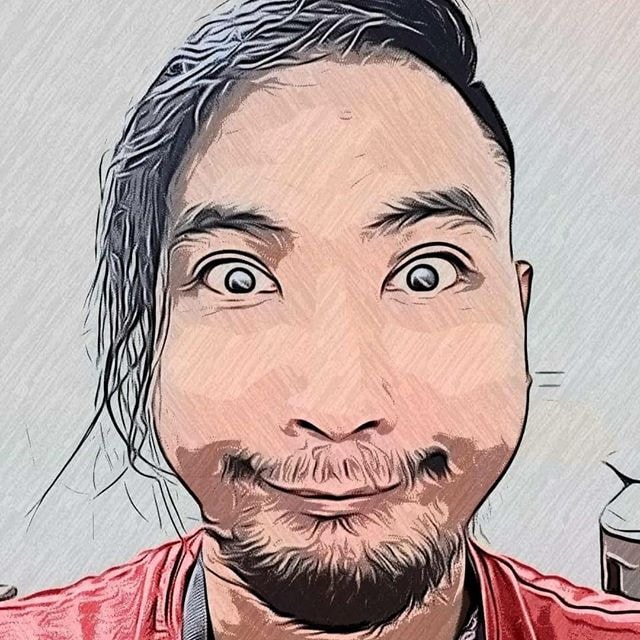
I really enjoyed writing this along with my MS Paint masterpieces that I illustrated along the way, almost forgot that creating something from your own human hands are an amazing feeling!
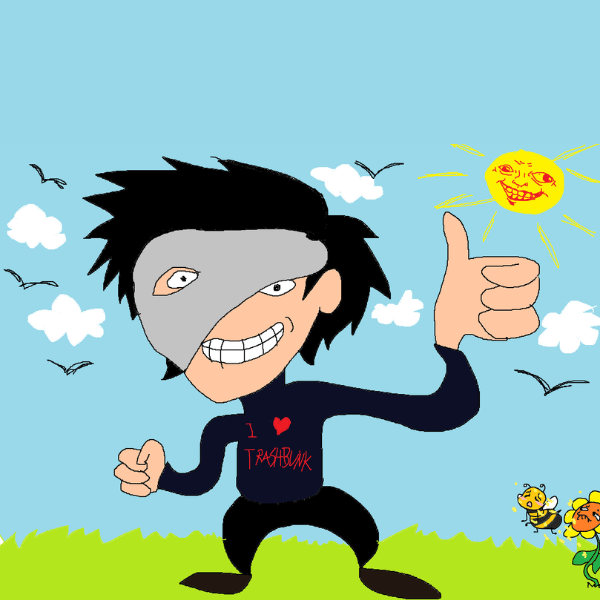
Let us get one thing straight first: this is not some old man yelling at the clouds because technology moved too fast.
AI has uses. Even the people criticizing it know that. It can help organize work, fix grammar, clean up writing, summarize information, and make certain tasks more efficient. Many of us use it in one way or another, especially for work that is repetitive, administrative, or technical.
But there is a massive difference between using AI as assistance and using it as a substitute for creativity.
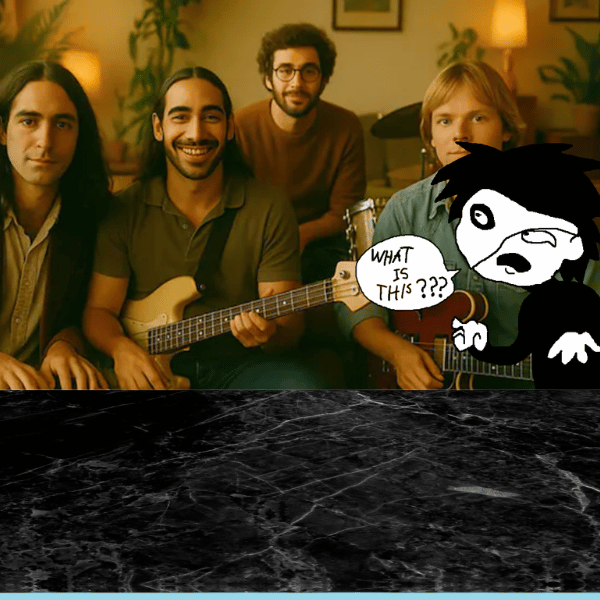
That is where the problem begins.
Because lately, social media has been drowning in what people now call AI slop—mass-produced, low-effort content generated not from genuine artistic intent, but from convenience, speed, and the desire to look creative without doing the hard part. It is showing up in visual art, design, writing, and perhaps most insultingly, music. And the more it spreads, the more it becomes clear that this is not innovation. It is erosion.
What exactly is AI slop?
AI slop is not simply “art made with AI.” The term points to something more specific: content that is hollow, disposable, and algorithmically assembled to mimic creativity without actually carrying any depth, authorship, or lived perspective.
You know it when you see it.
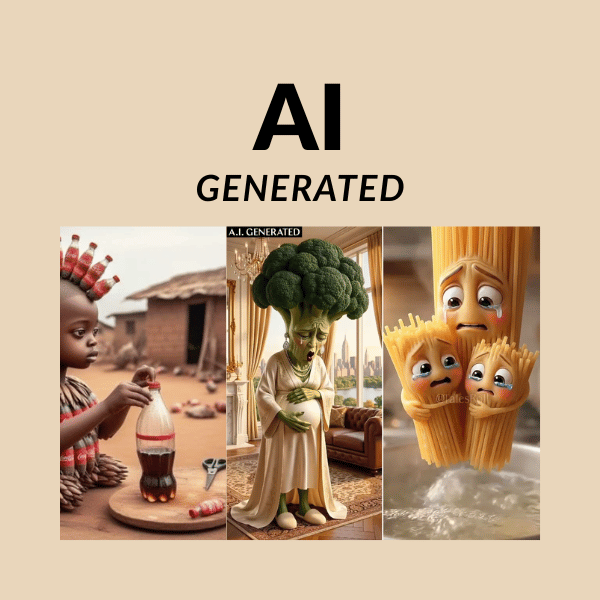
It is the same glossy textures. The same exaggerated “cinematic” lighting. The same overly polished faces, stiff compositions, fake grit, and empty emotional cues. In music, it is the same uncanny vocals, generic melodies, flattened emotion, and “almost good” production that sounds more like a simulation of a song than a song itself.
It is content that exists because it is easy to make, easy to flood onto timelines, and easy to mistake for real effort if your standards are low enough.
And that is exactly why people are getting tired of it.
The novelty is gone
Maybe there was a time when AI-generated work felt shocking. For a brief moment, the average person saw it as futuristic, strange, even impressive.
That moment has passed.
Now, it is becoming one of the most recognizable forms of creative emptiness online. Audiences are starting to notice the sameness. The look. The sound. The vibe. Even when people cannot explain it technically, they can feel when something is off. They can feel when something has no sweat behind it. No taste. No scars. No point of view.
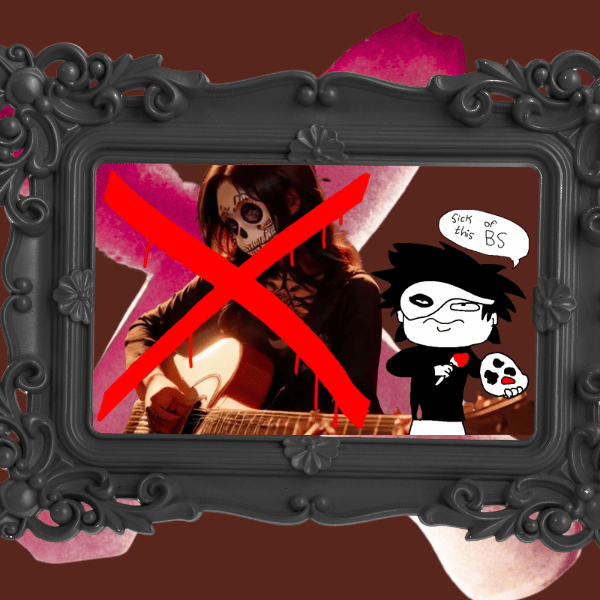
That is why AI slop no longer feels groundbreaking. It feels lazy.
What once looked like a technological flex now often reads as aesthetic spam—content made quickly, consumed quickly, and forgotten even faster.
Why artists should care
Because this does not just affect taste. It affects actual people.
When AI-generated content is normalized as a creative standard, it does not simply sit beside human-made art in peaceful coexistence. It competes with it, floods over it, and cheapens it. The more platforms reward speed, volume, and surface-level impact, the more real artists are pressured to either adapt to the sludge or get buried under it.
That means illustrators lose opportunities because somebody would rather type a prompt than hire them.
That means designers get replaced by generated approximations.
That means musicians who spent years building a voice have to compete with synthetic content made in minutes.
That means audiences get trained to expect more output for less effort and less money.
It is not just annoying. It is corrosive.
In local scenes especially, where artists are already underpaid, undervalued, and overworked, this kind of shortcut culture hits even harder. Every time someone replaces a local illustrator, designer, or musician with AI and still wraps themselves in “support local” language, the hypocrisy is impossible to ignore.
You cannot claim to support the culture while helping automate the people who give it life.
Art is not just output
This is the part too many people miss.
Art is not valuable just because it exists as a finished product. Its value is not only in the image, the song, the poster, or the words. Its value is also in the human decisions behind it.
The years it took to get there.
The mistakes.
The failed demos.
The revisions.
The influences.
The discipline.
The risks.
The strange personal obsessions.
The trial and error.
The emotional weight behind every choice.
That is what gives art texture. That is what gives it soul.
When people generate something instantly and then expect to receive the same respect given to artists who have actually built their craft, what they are really asking for is applause without process. Recognition without discipline. Identity without sacrifice.
That is not artistry.
That is entitlement wearing the costume of creativity.
“But AI is just a tool”
This is the most common defense, and also the most abused.
Yes, AI is a tool. But saying that alone tells us nothing. A tool can assist, or it can replace. A tool can support labor, or erase it.
Using AI to check grammar, organize notes, clean up workflow, or speed up repetitive admin tasks is one thing. Using it to generate the core creative work—the image, the song, the voice, the composition, the aesthetic identity—and then presenting it as if it came from the same human place as lived art is another.
That is where many people lose the plot.
If the machine is doing the artistic heavy lifting, then calling yourself the artist starts to sound less like confidence and more like delusion.
Typing a prompt is not the same as developing taste.
Generating a track is not the same as writing a song.
Producing content is not the same as making art.
“But not everyone has resources”
True. Not everyone has the money for expensive equipment, professional training, or large commissions.
But the answer to that has always been community, not replacement.
DIY culture exists for a reason. Bedroom recordings exist for a reason. Local collaboration exists for a reason. Trading skills, supporting small artists, commissioning within your means, learning slowly, making rough work before better work—that is how scenes survive.
Real art has never depended on luxury. It has depended on effort, honesty, and participation.
A rough demo made by a struggling band still has more artistic dignity than a polished AI-generated track pretending to be personal. A flawed poster made by a hungry young designer still has more value than a machine-generated one built from scraped aesthetics and empty imitation.
The issue is not perfection.
The issue is presence.
This is why it matters to us
For bands like TRASHBUNK, this is not just a philosophical debate. It is part of what we believe a scene should be.
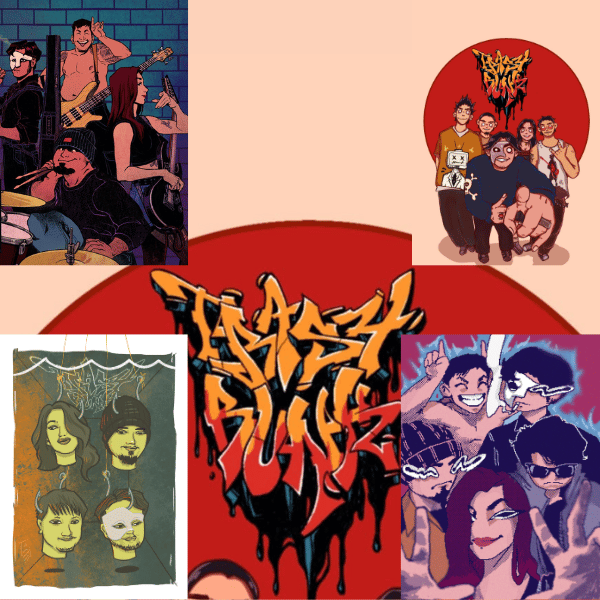
Artworks by El San – Indy – Yushieya (TALENTED ARTISTS FROM DAVAO)
We take pride in commissioning actual artists for our visuals whenever possible. That is because support should not stop at musicians. If you care about your local music scene, you should also care about the visual artists, photographers, editors, layout people, videographers, and designers around it. They are part of the culture too. They help shape how a band is seen, remembered, and understood.
Supporting local should mean supporting the whole creative ecosystem—not just the loudest part of it.
Otherwise, it becomes another slogan people wear when it is convenient, then abandon the moment a cheaper shortcut appears.
So why shouldn’t you be the next AI slop artist?
Because people are no longer impressed.
Because artists are already exhausted.
Because local scenes do not need more shortcuts pretending to be progress.
Because taste matters.
Because community matters.
Because the future of creativity should not belong to whoever can mass-produce the most convincing fake soul.
And most of all, because if your entire artistic identity depends on skipping the human part of art, then maybe what you want is not expression.
Maybe what you want is just the image of being an artist.
Those are not the same thing.
In a time when the internet is drowning in polished, instant, disposable content, sincerity is starting to matter more again. Imperfection matters. Effort matters. Paying actual artists matters. Making something real, even if it is messy, matters.
So no, you should not be the next AI slop artist.
Be a real one instead.