
Quarterlife Crisis – Murder of a Lunatic
As an Amazon Associate, I earn from qualifying purchases. That means I earn commissions from my sponsored links or I make money when readers (you) purchase items through my links. Your purchase allows me to continue working as a stay-at-home dad who moonlights as a farmer and a musician. Needless to say, this post contains affiliate links.
On March 20, 2026, Davao’s modern metal scene gets a shot of adrenaline that’s been building for four years with Quarterlife Crisis dropping their first-ever studio single, “MURDER OF A LUNATIC.”
Who Is Quarterlife Crisis? The Renegade Unit from Davao
Quarterlife Crisis was founded in 2022 by Wolf Quorthon (vocalist and producer) initially as a pop punk project.
That didn’t last.
Shortly after, the band “went rogue” and evolved into a modern metalcore paramilitary unit that they are now.
The transition from pop punk to metalcore represents a deliberate choice to reject the easier path.
Pop punk has wider commercial appeal in the Philippines.
Metalcore is harder, heavier, and demands more from both the musicians and the audience.
Choosing to go metalcore means choosing artistic integrity over accessibility.
To know more about the band, visit their artist page on Musikawabad here.
“Murder of a Lunatic” is the song Quarterlife Crisis consistently opens their live sets and it quickly became a fan favorite. And yet the band deliberately held back from releasing a studio version for years.
Why?
Wolf Quorthon explains: “We chose to maximize our resources and focus on refinement and production quality rather than rushing out a low-quality demo just for the sake of putting out music.”
This is exceptionally mature thinking for a local band.
The pressure to release something is intense.
Fans want recorded music.
Algorithms favor active releases.
Other bands are dropping tracks constantly.
But Quarterlife Crisis understood that your first studio single sets expectations.
If you rush out a mediocre demo, that becomes your reputation. If you wait until you can deliver professional-quality production, you establish yourself as a serious act worth taking seriously.
The Teaser Campaign
February 10, 2026 – First Teaser Video
Quarterlife Crisis posted a 15-second cryptic teaser across social media. The video features layered, droning synth atmospheres with rapid glitch visuals. During split-second flashes, faint reversed text appears:
- “REDRUM”
- “CINATUL”
- “03202026”
No caption.
No explanation.

“REDRUM” is obviously “MURDER” reversed—a reference to Stephen King’s The Shining that horror fans immediately recognize. “CINATUL” is “LUNATIC” reversed. “03202026” is the release date: March 20, 2026.
The choice to leave this unexplained is smart. Fans in the local music scene who know Quarterlife Crisis’s setlist recognized the reference. Everyone else was left curious, which drives engagement and speculation.
Why March 20? The Equinox Symbolism
The March equinox (around March 20) is when day and night are approximately equal in length. Wolf notes: “We chose March 20, the equinox, for the release as it is a moment when day and night are equal. That fact itself naturally aligns with the song’s theme.”
This connects directly to the song’s exploration of duality—light and dark, sanity and madness, creation and destruction. The equinox represents perfect balance between opposing forces, just as “Murder of a Lunatic” explores the balance (or imbalance) between rational thought and inner chaos.
This level of thematic consistency is rare in local music releases. Most bands just drop singles whenever they’re ready. Quarterlife Crisis chose a release date with symbolic weight.
Second Teaser: The Ouroboros Cover Art
For the second phase, Quarterlife Crisis updated their social media profile pictures with the single’s cover art (minus text). The cover features the Ouroboros—the ancient symbol of a serpent eating its own tail.
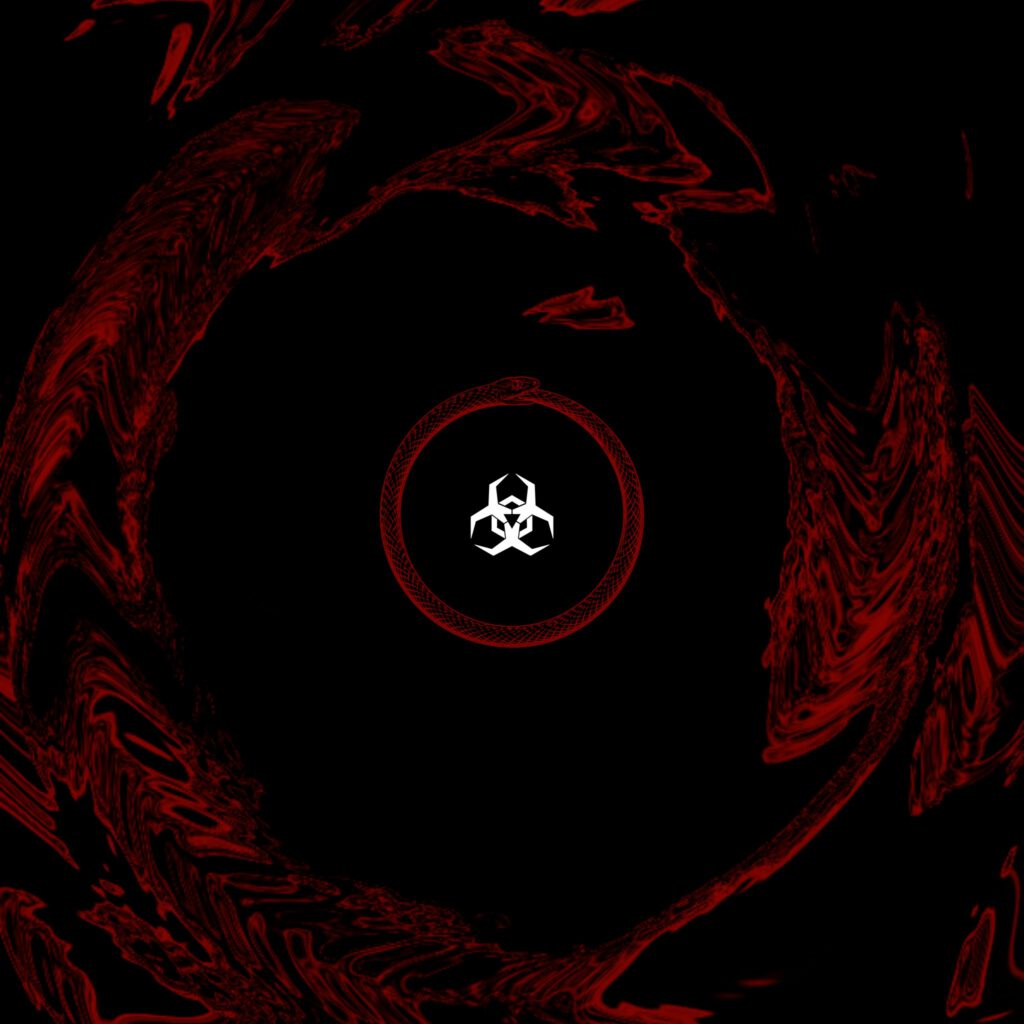
Wolf explains: “The Ouroboros symbolizes both destruction and rebirth, a nod to how confronting inner darkness is painful but necessary for transformation. It also mirrors the endless loop of destructive thoughts in a ‘lunatic’ mind.”
The Ouroboros appears across multiple cultures and philosophies:
- Ancient Egypt: Cycle of the sun
- Greek alchemy: Unity of all things
- Gnosticism: Infinity and cyclical nature of existence
- Psychology: The integration of opposites
Using this symbol for a metalcore single about mental instability is thematically perfect. The serpent consuming itself represents self-destructive thought patterns, the cyclical nature of mental health struggles, and the painful process of transformation through confronting darkness.
Third Teaser: Audio Snippet
Most recently, Quarterlife Crisis shared a snippet of the intro—just the drum fill and synth parts, minus guitars and bass. This teaser now shows the song title and platforms (presumably Spotify, Apple Music, YouTube Music, Bandcamp, etc.).
Reactions have been overwhelmingly positive, with the snippet reaching “international industry friends from the US, Europe, and Australia,” according to Wolf.
This demonstrates the power of strategic teasing. Each reveal adds information while maintaining mystery.
And it get progressively more exciting as release day approaches.
The Meaning: Fractured Psyche and Inner Conflict
Wolf describes “Murder of a Lunatic” as exploring “the inner conflict of a fractured psyche. Lyrically, it deals with mental instability, societal alienation, and self-destructive tendencies within the human mind. The ‘lunatic’ isn’t necessarily a person but a representation of the darker side of human nature that society often ignores or fears.”
This is deeply personal material. Wolf wrote the original concept during the pandemic—a period of global isolation, anxiety, and mental health crisis. The “lunatic” represents the parts of ourselves we don’t want to acknowledge: the intrusive thoughts, the self-destructive impulses, the darkness we carry.
The title “Murder of a Lunatic” is provocative and ambiguous. Are you murdering the lunatic within yourself? Is the lunatic committing murder? Is society murdering those it deems insane by ignoring or ostracizing them?
Wolf notes: “It was reimagined into a full song in 2024.”
This means the pandemic-era concept underwent years of refinement before becoming the version Quarterlife Crisis will release. That evolution from raw idea to polished song demonstrates artistic maturation.
The Importance of Releasing Original Music (And Promoting It Right)
Let’s address why releasing original music—and promoting it strategically—matters so much in today’s music landscape.
Why Original Music Defines Your Identity
In the Philippines, many local bands build followings by playing covers. Bar bands, function bands, and even some “original” acts pad their sets with recognizable songs because audiences respond to familiarity.
There’s nothing wrong with covers for building a live following. But covers will never establish you as an artist. They establish you as a performer.
Original music is the only way to:
- Define your artistic identity: What do YOU sound like? What do YOU have to say?
- Build a lasting legacy: Covers are temporary. Originals are permanent.
- Attract industry attention: Labels, promoters, and media care about originality, not replication.
- Create economic value: You can’t monetize someone else’s songs effectively. Your originals can generate revenue through streaming, licensing, and sync placements.
- Connect with audiences authentically: Covers create surface-level entertainment. Originals create genuine emotional connections.
Quarterlife Crisis understood this from the start. They’re not a bar band playing Bad Omens covers—they’re a band influenced by Bad Omens who’ve created their own sound.
Why Promotion Strategy Matters As Much As The Song
Here’s the uncomfortable truth: great songs die in obscurity every single day because nobody knows they exist.
Releasing music without promotion is like opening a restaurant in the middle of the forest and wondering why nobody shows up. You might have the best food in the world, but if nobody knows you’re there, it doesn’t matter.
Quarterlife Crisis’s teaser campaign demonstrates understanding of modern music marketing:
Build Anticipation: Three separate teasers across several weeks keep the release in people’s minds. Each teaser adds information, maintaining momentum.
Create Mystery: Cryptic reversed text and unexplained symbolism drive speculation and conversation. People share mysterious content.
Use Symbolism: The Ouroboros, the equinox, the thematic consistency—these create depth that music journalists and thoughtful fans appreciate.
Target Multiple Platforms: Sharing across Facebook, Instagram, and TikTok ensures maximum reach across different demographics.
Engage International Connections: Reaching out to industry contacts in the US, Europe, and Australia expands potential audience beyond the Philippines.
Time The Release Strategically: March 20 isn’t arbitrary—it’s symbolically meaningful and gives them time to build hype.
This is professional-level marketing that most local bands never attempt. They drop a single on Friday with a single Instagram post and wonder why it doesn’t take off.
The Economics of Streaming and Why Every Release Matters
In 2026, streaming platforms are how most people discover music. Spotify, Apple Music, YouTube Music, and others determine what gets heard based on algorithms that prioritize:
- Engagement: Saves, shares, playlist adds
- Completion rate: Do listeners finish the song or skip?
- Return listeners: Do people come back for repeat streams?
- External momentum: Are people searching for this artist? Sharing their music?
Every single release is an opportunity to feed the algorithm, grow your audience, and build your catalog. That’s why rushing out low-quality demos hurts you—poor engagement signals the algorithm that your music isn’t worth promoting.
Quarterlife Crisis’s strategy of waiting to release professional-quality production increases the likelihood of:
- Higher completion rates (professional production keeps listeners engaged)
- More saves and playlist adds (quality music gets saved)
- Media coverage (professional releases get reviewed; demos get ignored)
- Algorithmic promotion (strong engagement triggers playlist placement)
Why Local Bands Struggle With Original Music
Most Filipino bands struggle with original music for predictable reasons:
Financial Constraints: Studio time costs money. Many bands can’t afford professional recording and production.
Audience Expectations: Crowds at bars and events want to hear familiar songs. Playing originals can feel like killing the vibe.
Lack of Infrastructure: The Philippines has limited venues dedicated to original music. Most gigging opportunities are cover-focused.
Skill Gaps: Writing original music requires songwriting skills beyond just playing an instrument.
Impatience: Bands want instant results. Building an original music following takes years.
Quarterlife Crisis overcame these barriers by:
- Investing resources into production quality (waiting until they could afford to do it right)
- Building a live following through strategic show selection (international support slots build credibility)
- Creating a strong visual and thematic identity (the militaristic branding, the symbolism)
- Developing songwriting skills over time (pandemic concept reimagined into full song in 2024)
- Exercising patience (holding back the studio version until it met their standards)
This is the blueprint for any serious band: value quality over speed, build credibility through strategic opportunities, develop a clear identity, and promote intelligently.
What “Murder of a Lunatic” Means for Philippine Metal
The release of “Murder of a Lunatic” represents something bigger than just one band’s debut single. It represents the maturation of Davao’s modern metal scene and the professionalization of Filipino metalcore.
For years, Philippine metal has been dominated by extreme genres (death, black, thrash) in the underground and pop-rock in the mainstream. Metalcore occupies a middle space—heavy enough for metal credibility, accessible enough for broader appeal.
Quarterlife Crisis’s approach—professional production, strategic marketing, thematic depth, international awareness—sets a new standard for what local metalcore bands can achieve.
If “Murder of a Lunatic” succeeds (and based on early reactions, it likely will), it demonstrates that Filipino modern metal can compete on a global level, not just locally. The international industry contacts already engaging with the teasers prove there’s appetite for quality Filipino metalcore.
My Recommendation
I would recommend following Quarterlife Crisis closely through their release campaign and supporting “Murder of a Lunatic” when it drops on March 20, 2026.
Here’s why this matters beyond just one band:
For Davao: Quarterlife Crisis represents the city’s metal scene evolving beyond underground extremity into modern, accessible heaviness. Their success would put Davao modern metal on the map.
For Filipino metal: A professionally executed metalcore release with international reach demonstrates that Filipino bands can compete globally in production quality and marketing sophistication.
For musicians: The strategy Quarterlife Crisis employed—patient resource management, thematic consistency, intelligent promotion—is a masterclass in how to release music properly.
For fans: Supporting quality original Filipino music ensures more bands can afford to create it. Every stream, save, share, and ticket purchase validates the business model of serious artistry.
Watch for the full release on March 20. Stream it on whichever platform you prefer. Share it with friends who appreciate modern metalcore. Follow Quarterlife Crisis’s social media for continued updates.
And pay attention to how they did this—the patience, the strategy, the symbolism, the professionalism. This is how you release music in 2026.
The murder of the lunatic begins on the equinox. Make sure you’re there to witness it.
Connect with Quarterlife Crisis:
Facebook: https://www.facebook.com/0.25lifecrisisband
Instagram: https://www.instagram.com/0.25lifecrisisband
TikTok: https://www.tiktok.com/@0.25lifecrisisband
Artist Page: https://musikawabad.com/quarterlife-crisis/
Management:
Dead Beats Entertainment: deadbeatsent@gmail.com
Nyx Mari (Operations): 0.25lifecrisisband@gmail.com
“Murder of a Lunatic” releases March 20, 2026 on all major streaming platforms.

Leego Headless Guitar vs Donner Hush X: Why This Almost-Identical Guitar Is Making My 2026 Decision So Hard

The Predator Badlands Original Motion Picture Soundtrack Rocks!

Introduction to Writing Your Own Songs for Davao Songwriters by Fête de la Musique Davao and Holodeck Productions
About The Author
